This year has been different, you’ve probably read and heard about it far too many times. I’m here to tell you that this is the perfect time to think about the career path you want and plan for the career you can feel ready for. No matter how you felt about having lectures remotely, the absence of a graduation or prom ceremony, and the uncertainty around what should you do, there is one thing that always sticks true: applying for a job for the first time is never easy.
Most of us are thinking; “What should I do with myself now?” I’ve got a degree, A-level results, ambition, and a part-time job but I lack direction. But for many of us, it’s “I can’t even think about getting a full-time job when I’m struggling to find a part-time job in a coffee shop near me”. As someone who does not have a university degree, A*AA at A-level, or “connections”, I’m here to share my top tips on how to do the first big step you’ll ever do when you’re starting your career – applying for jobs.
I’ve heard stories from friends, my Mum, and people I know saying: “Sophie, I keep applying and applying on LinkedIn or Indeed and I never hear back from these companies”. Whilst this is fully true, it even happened to me and is just a part of the job search process. Back in Summer 2017, I was applying for a paid internship/work experience opportunity to have more exposure to working in Parliament or for a government department and I sent around 15-20 applications, got many rejections but also got considered for 2 different job roles. From this experience, I realised that applying for jobs is about the mindset you have, searching strategically, and being confident in yourself from the minute you read a job description. If you think that you’re worthy of a job, it will 99% articulate in your CV and cover letter as well as in your voice when you do the actual interview.
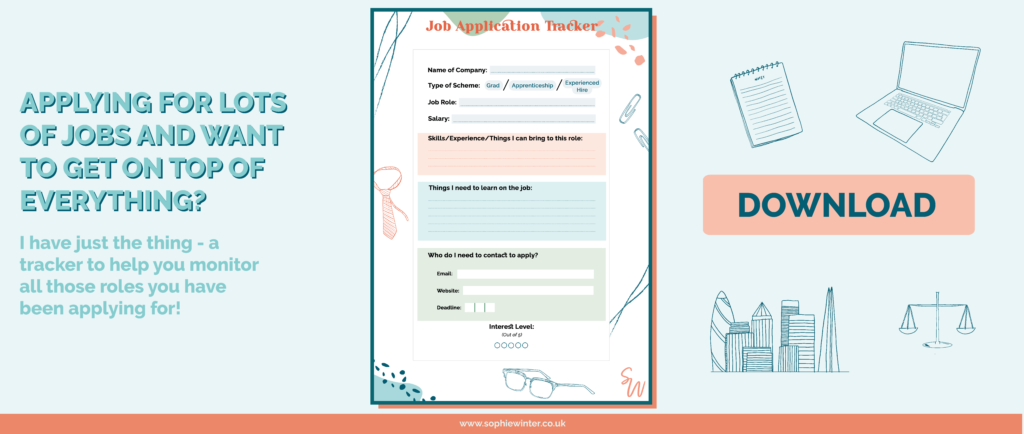
Applying for jobs isn’t about luck and hope. It’s about thinking about what skills/ traits you have that can enable you to start a role that enables you to build on existing behaviours and allow you to learn. It’s about showing your individuality and being different in a world where everyone is expecting to just land a job now that you have a piece of paper of results. You need to take responsibility for your job search and keep track of the places you’ve applied for and people who’ve you spoken to from recruitment/friends/family/ stranger you met on the road. Enter the “Applying for Jobs” tracker I specifically created.
I get it. You’ve applied for jobs online via Indeed or Google and weeks have passed, you’ve had an automated email saying “application submitted successfully” but no matter how many times you check your emails or look at your phone, there just is no response about whether you got shortlisted for an interview or not. To top that most companies are unsure about hiring, each day we hear about a new high street retail shop going into administration or job cuts being made. However; I’ve found some smart ways to find jobs and less stressful when you’re stepping your feet into the big confusing world of job ads and vacancies.
The tracker (which you can download below) fits in with all the tips and advice I cover in this article and will help you to stay focused and show the progress you’re making when finding a job.
1) Think about who you really are. Make a list of skills/ behaviours/ experience you have.
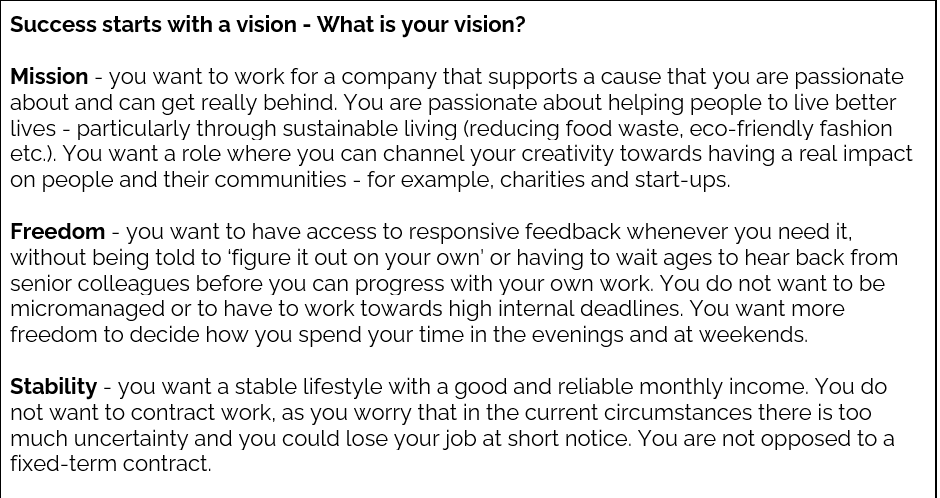
Before you start thinking about the job of your dreams or where you want an income coming from, I’d highly recommend you to take some time to think about the type of person you are: your strengths, the skills you’ve gained, the work experience you’ve had, what you enjoy doing, your personality and most important the values and ethos you hold. Questions such as “What do I want to bring to my job?” and “What type of company would I want to work at?” are all valid things to take into account. This is necessary as a first step because when there are so many jobs out there it may make sense to apply for any and every job but rather than doing that, you should be preparing for jobs that will be compatible with who you are. By doing this, you’ll have the FOCUS in your job search strategy and have a higher chance of getting an interview or the job. It’s also included in my tracker where you can do this exercise!
2) Do your own checks on the companies you’re applying to
As mentioned, in my above tip, thinking about the company you want to work for and the values they hold is a must. Each individual is different, some people want to work for a company that is forward-thinking and very tech-heavy, others want to work for a company they’ve heard of and is a household name.
Each company has a mission statement. A mission statement explains the company’s goals and summarises what it does for its employees, customers, and owners. It focuses on how they deliver and why they choose to do it. Think about whether your values are in-line with the company that you are applying for.
On my tracker, you can record the name of the company you’ve applied for, the type of scheme or vacancy it is, the job role, and the salary.
3) Start the job search ASAP. The longer you keep at it the more likely you’ll get a job.

Each job advert will have a deadline for when applications need to be submitted.
When I was applying for apprenticeships as a back-up option to university, I applied really late compared to most people but I still applied 5+ months ahead of when I was offered the job role. Make a note on my tracker of the deadline for the jobs you want, typically if it’s a grad scheme or apprenticeship you should apply 6 months – 1 year in advance but there is no harm in applying and seeing what happens… I originally wanted to start a job at one of the Big 4 firms and was told either to relocate to Birmingham or start a year later, I ended up getting a job offer at a competitor firm which offered more money and was a bigger company. Everything will work out.
4) Apply, apply, apply
The main frustration with job searches is the time spent and the lack of response from HR or recruiters for when you do apply.
Have an open mindset to job searching, see it as an opportunity to find as many jobs that you would enjoy doing and be interested in working for. The way to create a chance and opportunity at obtaining interviews and getting job offers is by applying to as many different positions and companies as possible. Bear in mind, applying to 100 jobs from working in a supermarket to being a Finance Manager isn’t the correct approach: it’s about applying to 15 different Finance Analyst roles because I want to work in Finance and not stacking shelves in Sainsbury’s.
Applied to 30+ jobs and not getting a response or a “Hey” from HR? Switch up your CV and make sure that you’re not sending the same CV you sent for the Finance Analyst job to the other part-time job you applied for at Starbucks.
5) An industry you’re interested in? Reach out to friends/family/ any contacts you have that you know has a job in this occupation.
Something I enjoyed doing when I was 16-17 was networking. Strange I know but it’s something that to this day, I will always preach and say it helped my career.
When I was in my mid to late teens, I was used to working part-time in a customer-facing job where I would talk to strangers whilst placing their usual soya chai latte order, these would be individuals I’d end up hearing about how their day went and their frustrations and typically I’d end up talking about my dreams/aspirations and what I want to do after I finish my A-levels. 90% of the time I’d get an email, a business card, or some sort of career advice. 10% of the time I’d get a person say to me “Don’t go into that job. You’re not right for it.”
Another way you can network is by thinking about your friendship group, family members, flatmates, and people you know who are in the industry you’re thinking of wanting to pursue. I get people to add me on LinkedIn, message me on FB asking about what it’s like working in Finance and Audit or for the Big 4. My LinkedIn consists of recruiters, auditors, and most people with a Finance or Consulting background. My partner is a software developer and the majority of the contacts he has are co-workers and individuals who come from a technology and coding background.
One thing I also noticed is that I’d also get messages from school friends who I fully well knew didn’t have an interest in Finance / Consulting or working in the Big 4 asking me to help them get a job and I don’t think that is a good approach to networking whilst doing a job search. You need to find a job that you want to do and not feel pressured into going into a certain type of industry or job role.
6) Keep a track of all the ways you’re applying for jobs.
Applying for jobs isn’t a one-way street. There are multiple ways to apply for a job – via an online form, in person, email, LinkedIn, Indeed, Monster, Google ads, recruitment agencies, you name it.
Uploading a CV and filling out the job application on an online website can be very time-consuming and become boring after the 5th attempt. Copy and paste the responses into a word document and make a word bank of different responses. This method helps to create different responses to similar-sounding questions and provide a basis for any answers when you’re struggling to put the words together.
As an additional bonus, I made a PDF Applying for Jobs tracker to help you keep track of the progress you’re making. Just fill it out whenever you’re applying for a job and save on your computer. You can keep a track of all the different companies and roles you’ve applied for, the deadline for the job, and the interest you have as well as evaluate what you can bring to the job and what you can learn on the job.
The best thing – you can use this tracker to apply for any job – be it part-time, as an experienced hire, as an apprentice, or as a grad!
DOWNLOAD NOW !